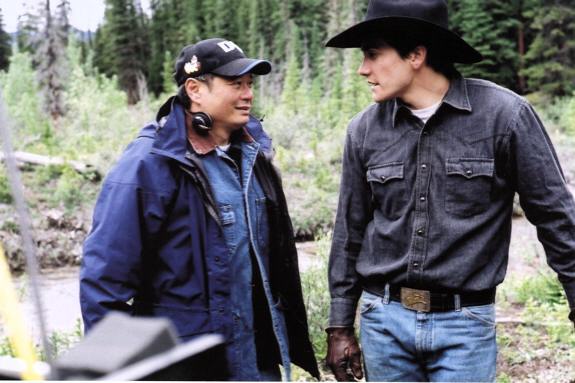
With many films there are scenes that hit the cutting room floor and don’t make the final version. What were some of the scenes that you really liked that didn’t make it into the film? Would you have preferred that those particular scenes stayed in the film? Why or why not? I can only think of two scenes that we filmed that didn’t make it into the film, and the question of their being in the final cut always existed. I’m not surprised or disappointed in either one of them being left out. Ang Lee is a master filmmaker, and his intentions for the film were very clear from the outset. It is a testament to his skill that only two scenes were shot and not used. Neither of the scenes were particularly dear to me. The first one involved showing that Jack and Ennis were competent cowboys. The other scene I won’t discuss, as its inclusion in the film would have influenced the audience’s perception of the ending. Out of respect for Mr. Lee’s exceptional work I cannot in good conscience divulge that information.
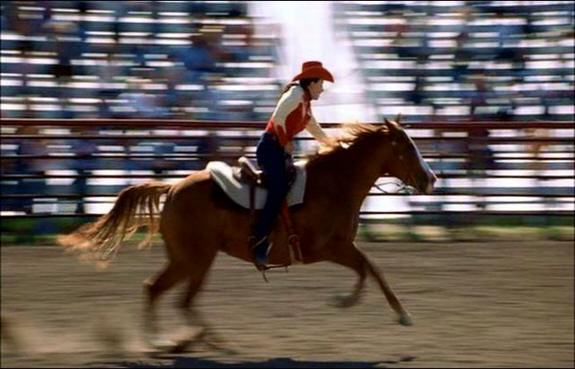
Two scenes that I would have liked to see more of were the rodeo sequence when Jack meets Lureen, and the Fourth of July scene. The reason is purely selfish, as I was in charge of directing background performers (extras) and we had arranged for some additional rodeo events that I coordinated with Kirk Jarrett (stunt coordinator) and some of my colleagues in the local rodeo scene. The Fourth of July scene was a difficult one for a couple of reasons. Firstly, timing fireworks with background action, a fight as well as performance, makes for a challenging little sequence. To top it off, it wasn’t warm, and it rained buckets during the days leading up to the shooting and afterward when we tried to do additional shooting. 1
Again selfishly, I would have liked to have seen more of the fight and to have held on to the image of Ennis standing over the defeated bikers while the night sky is lit with fireworks. Of course, I realize that Mr. Lee’s decision is the correct one, as I know very well that it’s always better to get out of a shot or scene sooner rather than dwell unnecessarily on a shot or a scene for self-indulgence. You are credited as a “First Additional Director.” My role in the making of Brokeback Mountain was of additional assistant director. My name being alongside that of Michael Hausman’s as first assistant director was a result of Mr. Hausman’s generosity and professionalism. The project presented a unique structure in the production department as Mr. Hausman was an executive producer, as well as the first assistant director. Each of these positions normally requires intensive attention, and only in the case of one with extraordinary energy, skill, and experience could a balance be struck. I was hired as support to Mr. Hausman and the producers when needed. That is to say, when executive producer duties needed more focus, I was able to help in decisions regarding scheduling and step in on set, if necessary. I aided in many facets of pre-production and shooting and will always be eternally grateful to the producers, especially Mr. Hausman, Scott Ferguson, and Tom Benz, who were instrumental in allowing me to make my humble contribution to the production of Brokeback Mountain. I noticed that, in the credits, the barrel racer’s name is given as Chyanne Hodgson, which is also the name of the next contestant called out by the rodeo announcer after Lureen rides out of the ring (just as Lureen and Jack are “meeting cute” over her lost hat). I’m guessing that Ms. Hodgson did all the riding that day, both as Lureen and as herself. Was it an unusual gesture to give her credit by using her real name in the film rather than calling her “Mary Smith”? Chyanne did most of the riding that day, but Anne Hathaway did one version (much slower, mind you) so that Mr. Lee could cut to her close up if he needed to, or speed up Anne’s version in post. Sometimes it works. Using Chyanne’s name over the PA is indeed a way to give her a little extra publicity and also helps with not having to legally clear a fictional name. 2
In the short story, at this point, Ennis remembers Jack telling him how he was abused by his father at the age of about four: for wetting the toilet seat, his father wetted him. And because Jack discovered at this moment that he was circumcised and his father wasn’t, his relationship with his father, such as it was, was wrecked. Pierre, was any of that ever scripted or considered for inclusion? None of the backstory of Ennis or Jack was in any of the scripts that I read. You would have to ask Mr. McMurtry or Ms. Ossana about earlier drafts. What were you doing when you heard that Brokeback Mountain had been officially nominated for eight Academy Awards, including Best Picture?
3 I was working on the project I had just finished. Specifically, I walked into the assistant directors trailer and the third assistant director and trainee assistant director, both of whom worked with me on Brokeback Mountain, were standing there smiling at me. They said one word: “Eight.” Now, keep in mind that this little show I was on was very challenging (daily schedule changes and extremely long days) and I usually am not at all a follower of the Oscars. As a result I had absolutely no idea that the nominations had been announced or what “eight” could possibly mean. So, I stood there for a moment; they smiled at me some more. I think I smiled back and said something brilliant like “Eight? Eight what? Eight extras showed up out of 30?” Then they told me, and I think I allowed myself a couple of minutes of nostalgia and wonder at how this little film I thought might do well as an art house theater release, and then live forever as a favorite in film schools and among discriminating viewers, could grow to such heights. Then I went back to work. The film is complex, multilayered and full of meaning. Was it visualized in its entirety in advance? How closely does the finished product resemble the film that was conceived during preproduction? Is it different in any significant way(s)? Were there elements that sort of developed on their own, either during production or post-production? What surprised you about it? This question requires a little Film 101, so I hope I don’t bore too many of you or seem too pedantic or condescending. Moreover, the vision of the film is the domain of the director, obviously, and so the final answer belongs to Ang Lee. Directing a film is a very difficult thing to do well. It is, after all, an artistic endeavor. Unlike most art, however, film directing requires a gang of a couple hundred people to “help out” in various capacities. On top of that, the director must be able to adjust to inconceivable conditions that arise while filming occurs: for example, bad weather (not just rain; sometimes it’s hail, snow, tornados, forest fires), bad health (one or more of the cast or key shooting crew), personality conflicts, mechanical / technical failure (from cameras breaking down to scratches on the negative), all of which I have personally experienced on projects. To be able to adjust to whatever the gods have in store for us when we begin shooting, and allow all two hundred of us to react effectively, a good director has a clear plan at the outset. Ang Lee’s vision of Brokeback Mountain was very clear. The script, of course, is the blueprint for the film. The clearer the blueprint the better foundation you have for making a good film. Since we had the best script most of us had ever read we had a great advantage from the beginning. However, it would be almost impossible to visualize an entire film in advance without making adjustments. In fact, keeping too rigidly to a plan can keep a director from exploiting opportunities that inevitably arise, as well. Ang Lee had worked very hard to communicate his vision of each scene to us as far as he could. We were given his breakdown of what he needed for each scene and we provided the elements. How closely the finished film resembles what he imagined in pre-production, again, can only be answered by Mr. Lee. As I said, we were given a breakdown of what Mr. Lee needed for each scene. For example, he may have requested wind and dust, which I then passed on to the special effects team. Or he may (in a perfect world) want a cloudy sky, which might require sky replacement if it’s sunny on the day we were to shoot that scene, which means I have to pass this along to the visual effects team and ensure that our second unit shoots plate shots of cloudy skies. 4
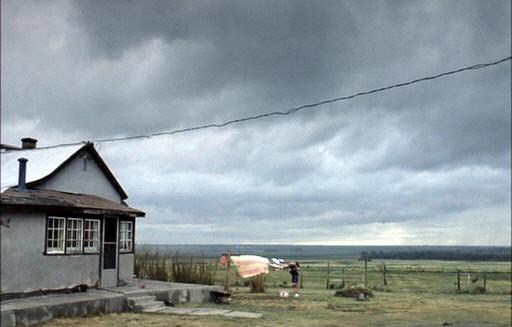
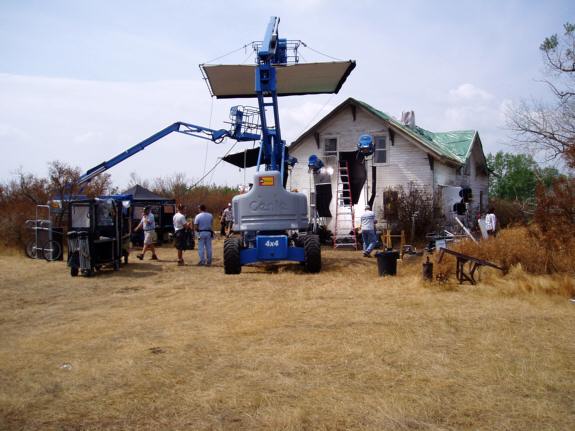
Each scene has a list like this including props, set decoration, etc. What isn’t included in the list is the most important element of all, which is, of course, the actors’ performances. This is where the director really makes or breaks a film, especially one like Brokeback Mountain that is really all about the performances. Because of this rather significant element being the sole territory of director and actors, I cannot thoroughly answer the question of whether the film realized the vision of Ang Lee. Of course, some elements develop on their own, as you can imagine: for instance, kids crying during a scene (Fourth of July), the wind howling (Ennis and Alma’s little house out of town), or sheep that don’t want to be pushed across a stream. We have to adjust to these things and either use them to our advantage or shoot around them.
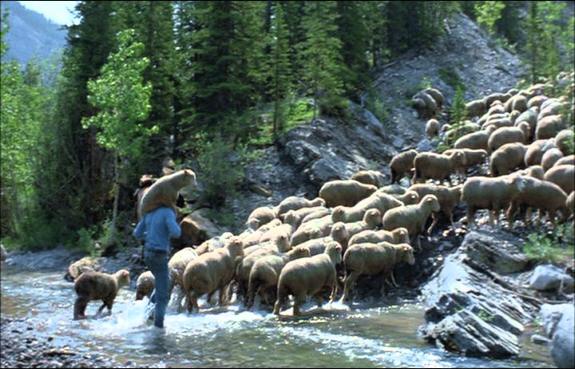
I must say, while watching the film I wasn’t surprised very much. Perhaps because Mr. Lee had such a clear vision and was generous in communicating this, and because I watched each scene unfold shot by shot, the finished film is pretty much what I had imagined all along. The only surprise so far has been the tremendous response. 5 I know this answer isn’t as complete as some of you might have hoped, but I cannot thoroughly answer a question about Ang Lee’s vision regarding all facets of the film. After all, as I said, it’s an artistic endeavor. “ ... or sheep that don’t want to be pushed across a stream.” Does that mean that having Jake haul those sheep across the stream was a necessary ad lib rather than something Mr. Lee had asked you to arrange in advance?
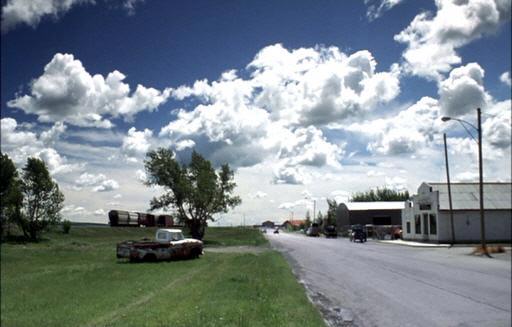
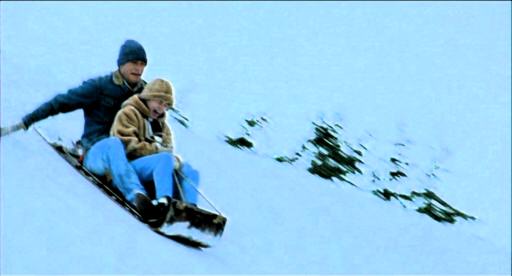
No, Jake didn’t ad lib the sheep on the shoulder thing. Mr. Lee asked him to do it. It did, however, take a little “encouragement” to get the sheep to cross a stream. There is lots of wind and dust in BBM, and it all seemed real, not produced. In other words, the wind seemed to be blowing even far into the background. Most of the wind in the film is real. Some scenes required additional wind, and many required dust. The hail in the camp was all handmade by the special effects department and their families, as it had to be made from biodegradable material and nothing was available and / or affordable. We, of course, recovered the majority of the hail, but I’m sure some of it was left behind. Is there any one scene in the finished film that holds a special place in your heart? Which scene is it? Why? There are a couple. The first one is the tobogganing scene, because I was able to make a creative contribution. 6 The second is the very first shot of the movie, when the cattle truck rolls down the highway. It was the very last thing we shot on Brokeback Mountain, and a second unit that Ang Lee directed. We were a very small group that day and we drove up and down some beautiful country shooting small pieces of the film (drive-by shots and scenics) with various vehicles. It was one of my fondest days on a set.
Can you tell us what your contribution was to the tobogganing scene?
My contribution to the tobogganing scene was that I helped come up with the idea of tobogganing as Ennis and Alma’s post-wedding activity. The original version had the young couple spinning doughnuts in an old truck in a small town parking lot in winter. Since we started filming in May we were very short on snow. So, we tested all manner of special effects concoctions to get a period pickup truck (quite heavy, those) to spin on pavement. We eventually came to the conclusion that we should think of something else. We needed something that would be a little dangerous that would show them having fun and getting closer. It occurred to me that we could go into the mountains, which still had good snow on them, and shoot tobogganing. Mr. Lee liked it and Ms. Ossana wrote it and we shot it a few days before principal photography was to begin. 7 Pierre, you mention that you did shots with various vehicles. Since so many posters have noticed the visual and thematic similarities between the opening shots of the cattle truck and the shot of Ennis’s truck driving home from the Twist family ranch much later in the film, I wonder if you could tell us if this second scene was also a part of your last day’s assignment? Yes, you’re quite right (and observant). We did, in fact, shoot those two shots on the same stretch of road on the same day. Did you have any idea during this project that it was somehow more significant than others that you’ve worked on, or did it just feel like any other indie project? If it somehow seemed that you were onto something big at the time, what led you to that conclusion / feeling? If not, now that you’ve been involved in a project that’s been blessed with so much acclaim, is there anything that you can look back on and see that you should have known it was going to be something special, or is it just totally impossible to tell what the finished product will be like and how the fickle critics and audience members will respond? This group of questions is a very interesting one, in that if studio executives had the answer to what makes a great film I’d be at the theater every weekend trying to keep up with the waves of outstanding cinematic releases. It’s hard to know what makes for a great movie. Having said that, there are certain indications of greatness, I think. For instance, every film begins with the script. In my experience there are precious few great scripts. This is perhaps where we find the weakest element in film productions. I’m not sure why, although the way writers are treated by studios is surely a big reason, but the literary basis of all film is sorely lacking. This is very significant because few directors or producers, despite their opinions, have the tools to turn out a great screenplay.
Brokeback Mountain was a phenomenal screenplay. Larry McMurtry and Diana Ossana crafted something very few scripts can claim to be: a great read. After having read a script of that caliber I’d become quite excited about the whole project. Knowing Ang Lee was at the helm made things all the better. 8 Moreover, I was astounded that the themes explored in the script were going to be released as a motion picture by an American studio. The subject matter was also of particular importance, in my opinion. So, to have an extraordinary screenplay, coupled with a subject that is important, gave me a clue as to the significance of the piece from the outset. What I didn’t expect, as I mentioned previously, is the outstanding response to this little film. I thought it would do well in the major metropolitan centers, and in Europe, and maybe garner some festival prizes. I thought the subject matter and slower pace would surely make for an elite audience only. Another clue was watching Ang Lee rehearse key scenes with the cast. Since another pitfall many directors fall victim to is sentimentality, I was very encouraged to see Mr. Lee always err on the side of subtlety and reservation. As I watched Heath and Jake shape these characters it became clear we were onto something big, or at least good (maybe great) which for anyone working in film is rare indeed.
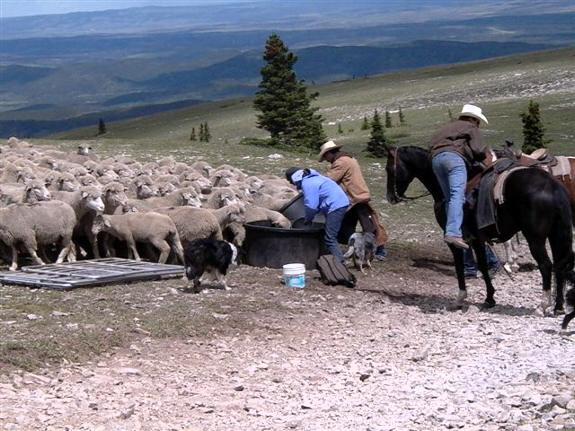
Finally, it isn’t completely impossible to tell beforehand if a film will be good. A good script, a good director, a great cast, and good crew are all positive signs. To have all of that come together in the right time and place, however, is very infrequent. There are so many factors that go into making a motion picture that it amazes me sometimes that any of them turn out at all. If one considers the tons of material produced each year and how much of that is watchable, good films become all the more special. I don’t think audiences and critics are all that fickle, but quite predictable. The accountants will tell you it’s all about forecasting, market share, demographics, etc. I’m more surprised by what audiences consider good, most of the time. I’m certainly most pleasantly surprised by the reception Brokeback Mountain received. I’m taking it as a sign of things to come. Do you have any funny stories about working with hundreds of sheep? Sorry, not really. Any of the stories I could tell would be in the “you had to be there” category. You would have to imagine a film crew finding new ways to insert the sound of sheep into daily conversation. Just catching oneself standing around having serious discussions about how to best use a herd of around 800 sheep was enough to keep us amused for days. 9
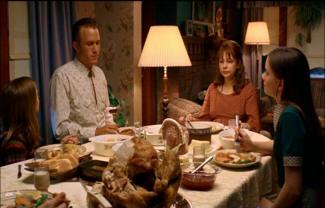
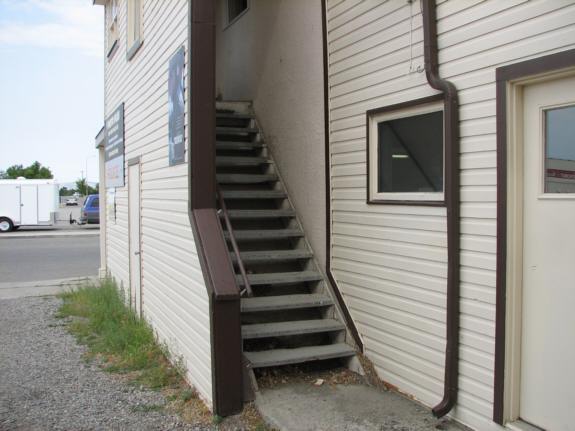
Was the sheep that was shredded by a coyote really a shredded sheep? No, the slaughtered sheep was not butchered for the shot. It was created by the props department. Come to think, how did you manage the shot of Ennis’s elk? Was it hit with an anesthetic dart? The elk was shot with a tranquilizer dart on an elk farm. Personally, I didn’t mind the sheep. They certainly weren’t quick to move but they gave us less trouble than a lot of humans have. The film deals with very difficult themes (homosexual love, homophobia, broken families, making difficult decisions, etc). For you, what was the most emotionally difficult scene to film? Why? I’m afraid I didn’t find any scene particularly difficult emotionally. Please remember, I’m at work when we’re filming these scenes and my job is to always be thinking and preparing for what is coming up. My approach to what’s going on is (has to be) more clinical, if that’s the right term. At best I might think about how a performance is too subtle, over-the-top, or forced, but that’s about it. My job is such that it’s actually more difficult if I get too wrapped up in what’s going on. I’m the guy, unfortunately, who has to remind everyone that, although the scene we’re shooting might be mesmerizing, we still have two more scenes to shoot. Don’t get me wrong. I can be as moved as anyone by a performance, but rarely on something I’ve worked on. 10 Are you able to enjoy movies you have worked on when you see them later on the screen, or is it just too distancing? Are you able to enjoy ANY movies (that is to say, lose yourself in them as a fully engaged layperson might), or do you always somehow find yourself analyzing technical details? Unfortunately, having worked on a film transforms it into a different experience as an audience member. First of all, I know how it ends. I also know how it begins and just about everything in between. Then there’s the fact that I’m reliving something I did a year or more ago. I can’t help but think of the places we visited, the challenges and delights we all experienced. So, it becomes much more than just watching the film. I am quite able to enjoy movies as an audience member. After all, I became involved in this job because I love movies. The big difference is that I think my standards are higher than if I weren’t involved. If there are any mistakes, including performances, I begin to lose faith in the film and have a hard time being won over. Heath Ledger said on Oprah that the scene where Alma witnesses Jack and Ennis kissing was the first scene filmed. We have read that first assistant directors prepare the shooting schedule. Why did you decide to film this scene first? Do you think this scene would have been as important and / or successful had it been filmed later in the process? Why or why not? Well, I’m sure what Heath meant, if he didn’t actually say this, was that this was one of the first scenes to be shot between he and Jake. We shot many scenes before that one including the tobogganing scene, the wedding, the drive-in, and the Thanksgiving scene, not to mention several scenes with Alma and the girls in the apartment.
Monroe’s
Thanksgiving, Schwab / Moriarity home The decision to shoot this scene at that point in the schedule was not mine. I had input into the schedule, but many factors had already been taken into account before I began working on the picture. The early scheduling was done by Michael Hausman and Scott Ferguson. I can say that as assistant directors we try to schedule scenes as close to the script order as possible. In this case, I recall that Jake Gyllenhaal was not available for the first few days of shooting. Also, we needed the snow to be completely melted from the mountain locations before we could get the unit into them. We scheduled the apartment scenes as close to script order as possible, but that meant that Heath and Jake really only had two scenes at that location and one of them was, well, a challenging one. 11 I should also say that the actors had rehearsal time together, though not for this particular scene, before shooting began, so they certainly weren’t strangers or unprepared.
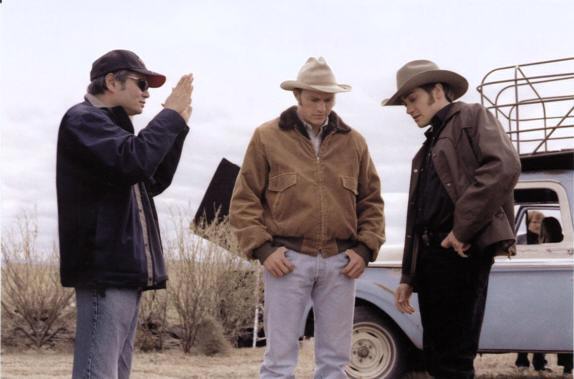
I don’t think the scheduling of the scene would have had a significant impact on the success of the scene. The scene works because of the incredible performances and the inherent drama as written. Performers of this caliber would have pulled this scene off regardless. What the hell was Bobby eating? Bobby was eating cereal with pieces of fruit in it. I think it was peach, but I’m not one hundred percent sure on the fruit. The actors have said that the directorial team was very hands-off once shooting started. With such great performances from actors this proved to be a very successful method. What were your intentions behind this unique approach? Do you think that the film would have suffered had you been more hands-on with the actors? There was only one person who gave direction to the actors on the directorial team, and that was Ang Lee. This was as it should be. I have worked on films where direction was done by committee, and it doesn’t work on many levels. From what I observed, Ang Lee’s approach to directing is to only say what needs to be said when it needs to be said, and otherwise to let the actors follow their instincts. I can’t remember who said that 90% of successful film directing is in the casting. I would completely agree with this statement. If actors are creating something special the director should have little to do. Overdirecting is a sure way to kill an actor’s instinct and enthusiasm. On Brokeback Mountain we held rehearsals before shooting began for scenes that Mr. Lee wanted to work on ahead of time, and those were essentially shot as rehearsed. Other than that, the director and actors worked on the scenes as they came up on the schedule. 12 I should say that although the title of assistant director has “director” in it, we are essentially the logistics and communications specialists on a film. We do direct background performers. However, the director of a film is solely responsible for directing actors on performance.
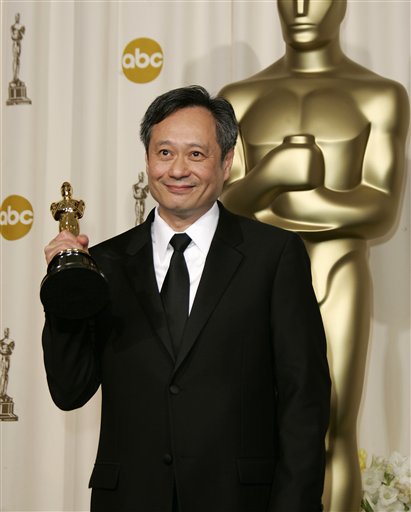
Would you consider Ang Lee to be an auteur in the classic sense of the term? Jake Gyllenhaal described him that way in an interview a while back. We would love to hear your thoughts. (Note: Auteur [author in Fr.]: a theory of film that emphasizes the director as the major creator of film art. A strong director, an auteur, stamps his material with his personal vision, often in spite of an externally imposed script.) I think auteur is a term that is often misused in film. In my opinion, an auteur is (literally translated) the author of the film. So, when a director writes an original script and then directs, I consider him or her the auteur. Brokeback Mountain had more collaboration. That’s why Mr. Lee has thanked the author of the original story, and the writers of the screenplay, specifically, in his various acceptance speeches. 13 |